As part of our tenth anniversary celebrations, we are writing a series of blog posts in which members tell us about their experiences with the WCC UK. Our third interviewee is Dr Carol Atack.
Carol Atack is Director of Studies in Classics at Newnham College, Cambridge. Her research deals with fourth-century BCE classical political thought, with a particular focus on the political and ethical thought of Plato and Xenophon. She was also the first Treasurer of the WCC.
She discusses her involvement with the WCC with Katherine McDonald, current co-chair of the WCC.
KM: How did you first get involved with the WCC?
CA: I met Liz Gloyn at a conference when she had just come back from her PhD at Rutgers. It was the Cambridge Triennial in 2012, which was one of those conferences that brought a lot of people together. But it was evident to us that there were lots of separate islands in the classical world, and communications between them weren’t always perfect. I went away from that event feeling that building community was really important.
Both from my research and my teaching around that time, I also got a sense that feminism itself was going in new directions, and that there were new conversations to be had. Once a group of us started talking and meeting up, it was amazing to meet so many people who were asking similar questions of different material or using the same theoretical approaches or facing similar problems.
The original meeting at Senate house [in 2016], the first kick-off meeting, was so energising, so powerful. And, yes, showed that there was lots of work to be done, and I think started to show some of the challenges that would lie ahead. Fundamentally, I think it demonstrated that there was a real need for something like the WCC to provide a space in which feminist and intersectional approaches were front and centre not marginal.
KM: Are there any other events or particular initiatives that stand out in your memory?
CA: One of the things where I think we were able to make a difference as a small organisation, which was pretty fleet of foot, was at the crisis point that emerged at the Covid shutdown at UK universities [in March 2020]. The WCC had become incredibly aware of the huge precarity of graduate funding in the UK, because it affected a lot of members. It became very clear, the minute that the Covid lockdown took hold, that a lot of partially funded and self-funded graduate students across the humanities were relying on casual work in operations that were now shutting down. So, whether that was library work, or hospitality in coffee shops and bars, or whatever, the work that was paying people’s rent evaporated. And that was a huge crisis.
But we as the WCC had money that was intended to give people small grants to go to conferences, and those conferences were not going to be happening. So there was an opportunity to repurpose events funding to provide living grants for students. And we managed to get that up and running very quickly, very straightforwardly. It was really on a kind of no questions asked basis: if somebody applied from an institutional address, then we could send them money.
That went through several rounds in the end. We were able to get the Classical Association to provide funding, and other organisations stepped in and helped or developed their own similar schemes.
Precarity of student funding remains a huge issue in the humanities, but that moment crystallised it for individuals whose very careful planning and budgeting completely collapsed.
KM: I think that’s something to be very proud of. I think if people weren’t directly involved in that, they might have no idea.
CA: We did it very quietly and we aimed not to be a burden on applicants.
One of the other things I’m proud of is that the WCC has always been an inclusive organisation. We’ve not been a single sex organisation, we have always had men as members and we have also been very clear that we are open to trans members and non-binary members. So whatever people’s sexual or gender identity is, there is a space for them if they are in support of our aims.
I think there have been some moments of profound learning along the way with different projects. There are points where one realises that one’s feminism has been naïve and not appreciated the complexities, for example in the intersection of gender and race or class. But I think the WCC did make a good call on inclusivity early on and that is really important now. And that came from listening to student and early career members. The fundamental principle of being an inclusive organisation was important.
KM: So, I think you’ve touched on some of this as you’ve talked about those initiatives. What has the WCC added to your life as a woman in Classics in particular?
CA: I think it’s given me a lot of comradeship and community. I’ve made friends through it and strengthened relationships with people working in similar areas. I’ve also learnt from people working in very different areas. I still do teach a lot in areas where feminist scholarship is really significant. I’ve had conversations that have helped me to appreciate different approaches, understand topics in different ways, and come to an appreciation of theorists whom I might have found difficult. There’s been a lot of learning as well as community.
I’ve spent most of my time in Classics in big departments where there are lots of people, and where there’s always someone else who is doing your stuff. So it’s maybe not been as extreme for me as it might be for somebody who is in a smaller department. But I really got a lot out of meeting people across the range of the profession, and seeing the kinds of ideas and questions that the early career members were coming up with.
KM: Finally, then, what would you say to someone particularly an early career scholar, or a student, who’s considering joining the WCC for the first time?
CA: It offers you another space in which you can have interesting conversations with people. Some of whom you will agree with, some of whom will challenge your views. Especially if you are working in a part of the subject that is more female-coded then you may find a wider array of useful interlocutors and people who understand the position of the work you’re doing. But obviously the WCC goes a long way beyond people who happen to work on sexuality or gender-related topics. Equally, if you’re working in a part of the subject where women and people concerned with gender equity are thinner on the ground, then it will be useful too. But fundamentally, it’s a good space in which you can come together and engage with people who might be experiencing similar things to you, and who might be looking at similar issues to you.
I think I’d also say that there were some moments of profound learning along the way with different projects and that in a way, some of our experiences in understanding intersectionality and getting that right, we had some painful learnings events that didn’t go well. Real challenges as feminism as a kind of project evolved from one phase to another, there was a lot of a lot of learning there. That was important on a research level, how are you approaching topics? When you talk about women in the ancient world, what women are you talking about? But also in understanding better the multiple forms of exclusion that operate across academia and thinking very hard about Classics as a subject and its history, and the kind of social exclusions, class or race and ethnicity as well as gender.
So I think that’s something that I have felt that, certainly while I was actively involved in the WCC, that was a journey. I think this should be a continuous learning experience.
I do think there are there are points where one realises that one’s feminism has been naive, not appreciating some of the complexities. I do also think that generally speaking because, British feminism has often been based in the labour movement and has shared both its openness and its closedness to other forms of oppression and understanding the intersection of sex and race based challenges and exclusions. I think that in a sense it’s a different journey from organisations in the US and understanding the difference between American and British feminist experience has also been an important thing to learn about.
And sometimes I think that because of all the amazing American scholars, whose work has dominated the field sometimes, the tradition or British social history and feminism haven’t quite made their way into Classics. So I think there’s a lot of learning there.
And also there were some things before WCC got going. An awareness of a need both for community and support to bring together. People who might be studying gender related topics who are kind of flung it around in different departments and might feel a bit marginalised in their own context, but might find it really powerful and useful to get together with people teaching their topics.
But also some of the challenges that still existed for women in the discipline which are kind of historical and complicated. Not always very evident from the outside. It always looks as though there are plenty of women and sometimes it might seem that there are a lot of women in the room and then, you will say hang on. What are they doing? Where are the senior people? Why isn’t this getting support? Why is this question being treated as trivial or marginal rather than being taken seriously?
As part of our tenth anniversary celebrations, we are writing a series of blog posts in which members tell us about their experiences with the WCC UK. Our second interviewee is Prof. Amy Russell.
Amy Russell is an Associate Professor of History and Classics at Brown. She is a Roman political and cultural historian, with a particular interest in architecture, urbanism, and space. She is a founding member and former chair of the WCC UK.
She discusses her involvement with the WCC with Katherine McDonald, current co-chair of the WCC.
KM: Tell me a bit more about how you first got involved with the WCC.
AR: You know I can’t remember exactly how I first heard about it. I’d relatively recently come back from America when this all started and I’d been a member of the WCC there. And so when I got an email saying, hey, there’s some people talking about this, I was very excited to join in. And I was one of the first people on the steering committee.
KM: So that was all about ten years ago now. In that last decade, were there any particular WCC events or initiatives that stand out to you and have been important to you?
AR: I think you’ll hear a lot of people talking about community, and I think that’s really true. Going to the in-person events was really important to me, and I’m sure online events important during the pandemic as well. But just the initial buzz around the first few in-person events, and realising, look, this is a community and we do have a real critical mass of people who are interested. And we had people willing to put in time and energy into making it all happen, and having pedagogy events, and they were really exciting people thinking about exciting things.
But I’m also very proud of the work we did behind the scenes. For example, we put in a proposal to be an official nominating body for the REF. I’m sure that there is a very strong case to be made that we should not be cooperating with the REF, but in the end it seemed to me that it’s probably better that we have a voice. So even though at the time we still felt we were very scrappy and new, we put in that application and we were successful, and then when it came time for the nominations I feel like we really did get to have a say. The Steering Committee behind the scenes were reading applications and were able to make a case for people that we thought would be good panellists, and indeed good chairs. And I am pretty proud of what we achieved. And again, with feminist activism, there’s this constant tension between working with the institutions and burning the institutions down, but sometimes working with the institutions can be a powerful tool.
KM: It’s really interesting to talk about the backstage side of it, because people often talk about an ‘old boys network’ as something that women and other marginalised people in Classics are really missing out on, and I think the opportunity to build an alternative version of that is very powerful.
AR: And one that is truly open to everyone. We had always conceptualised ourselves as being open to everyone and having a definition of ‘woman’ that was very inclusive, but also being open to people who don’t identify as women. And that was a big part of our activism from very early on. It was very surprising that there wasn’t some kind of women’s organisation already, but at the same time this was the period when organisations were springing up in different disciplines for trans people as well. Classics didn’t have any of that, at least on an official, institutional footing, and so we immediately were doing some of that work, which I see as all connected. And then, what happened at the San Diego SCS, and we did a lot of coordination of the different Classics organisations in the UK to issue a statement in reaction to that.
And another thing we were doing behind the scenes, and I’m not sure if I would do it the same way now, was contacting people who were putting together ‘manels’ and asking – would you consider making changes to your programme. I don’t know if that was the most efficacious way, but we were thinking it all through. I’ve had a lot of interesting conversations about that, then and since. And I think the guidance that we put out about manels and about hiring plans and things like that, those were good, useful documents. I hope that people have read them.
KM: So, this is all about the wider system, but is there anything you feel the WCC has really added to your life as a woman in Classics?
AR: It definitely comes back to community. These people are still people I feel very close to and work with, and can share frustrations with sometimes. When I was a graduate student, I was still only beginning to realise how bad things were. We talk lot about feminisation of the humanities, but in some places and some universities, Classics still is one of the last to go. I remember when I was doing my Master’s at Oxford, and I decided to sit in on the MSt in women’s studies, and I walked into the lecture room and I realised for the first time in my life I’d been in a room that was majority women at a lecture. Because I’d come up in this system that I’d seen as completely normal, and I’d never connected my own activism outside my work with what was going on in my own field.
K: Final question then: What would you say to anyone who is thinking of joining the WCC for the first time?
A: Well, I’d say, do it. Take advantage of this organisation that allows you to find community with people working at different kinds of institutions, with different kinds of life experiences. For me certainly it’s been incredibly helpful for me to think about, with lots of trial and error, the relationship between my own professional identity and my own activism. Certainly for anyone who is having thoughts about that, this is a great place to go.
As part of the Women’s Classical Committee’s tenth anniversary celebrations, we invite you to join us for a lively round table discussion and Q&A on the theme of ‘Celebrating Women in Classics’ on 22nd April 2026 at the Institute of Classical Studies, University of London. Our panellists are experts across a range of disciplines whose work offers new and different ways of celebrating the women of the ancient world, as well as the women who have studied the ancient world.
Topics will include: the impact of modern retellings of Classical myth on the study of Classical Civilization in schools (Katharine Russell), women on the Grand Tour (Dr Hardeep Dhindsa) and the use of the women of ancient myth in modern theatre on the themes of peace and war (Dr Alice König).After presentations by the speakers and a panel discussion, the audience will be welcome to ask questions and join the conversion.
This event will begin with a drinks reception from 5pm; the panel discussion will begin at 6pm.
All are welcome to this free, celebratory event. The event is in-person only, but a recording will be made available afterwards.
The evening event will be preceded by the WCC’s AGM, from 2-4pm. This is for members only, but all are welcome to join (see details below). This is in Room 264, and a link has been sent to members.
Katharine Piu San Russell is a PhD student at Durham University. Her research looks at how the recent wave of myth-based fiction by female authors is changing the classical pedagogy landscape. By interviewing students and teachers across England, she has found that this literary trend has been generating a sense of belonging for a new community of young women classicists. Her research was inspired by five years spent as the Head of Classics at a multi-academy trust in the East of England.
Dr Hardeep Dhindsa (he/him) is the Curator of Victorian Art and the Global at Birmingham Museums Trust, specialising in Greco-Roman art and its receptions. He is interested in the relationship between Whiteness and classical antiquity across the British Empire, particularly during the long eighteenth century. Hardeep has collaborated with several cultural institutions, including The British Museum, The National Trust, and The National Gallery to develop public programmes addressing the difficult histories of empire.
Prof. Alice König is a Professor of Classics at the University of St Andrews. Her current research projects, ‘Visualising War and Peace: interplay between conflict narratives in ancient and modern cultures’ and Visualising Peace, both explore the ways in which interplay between conflict narratives in different media has helped to canonise ideas about war and peace across time and space. Since 2019 she has worked with the professional theatre company NMT Automatics, including on the development of their 2022 play, ‘Tempus Fugit: Troy and Us’, more recently on a new play about peace and post-conflict recovery, provisionally titled ‘Rena’. In 2025, Alice founded the Ancient Peace Studies Network.
Supporting the WCC UK
This event is free to attend, but if you would like to support the Women’s Classical Committee UK’s work, make a donation via Paypal or join the WCC as a member.
Members of the WCC UK are eligible to join our mentoring programmes and apply for our Small Grants funding, as well as always having free access to all our events. Membership fees are £20 per calendar year, or £5 for students and unemployed, underemployed, or retired members. For more information and to join please visit our website.
Financial support for attendees
Thanks to generous funding from the Classical Association and the Council of University Classics Department’s EDI Committee, we are able to offer 7 bursaries of £100 each to enable graduate students and unemployed or underemployed attendees to participate in this event. For more information and to apply, please click here for the application form.
Members of the WCC UK can alternatively apply to our Small Grants scheme for up to £150 towards their costs in attending the AGM and/or the evening event.
Funding
We are grateful to the CUCD, the Classical Association and the John Coffin Trust Fund for their generous support for this event.
As part of our tenth anniversary celebrations, we are writing a series of blog posts in which members tell us about their experiences with the WCC UK. Our first interviewee is Dr Irene Salvo.
Irene Salvo is a Lecturer in Ancient Greek History at the University of Verona. She has been a LGBT+ activist since many years, promoting the visibility of queer identities in the field of Classics and Ancient History as well as harnessing the power of Greek and Latin sources to fight homo-transphobia through education today.
She discusses her involvement with the WCC with Katherine McDonald, current co-chair of the WCC.
KM: How did you first get involved with the WCC?
IS: Basically, I have been involved with the WCC since the very beginning. It was 2015 in London, and I participated in the sandpit on ‘Classics and Feminism’ organised by various people at the University of London. I remember Effi Spentzou was one of them. It was a way of gathering people interested in feminism in Classics and talking freely about research ideas and teaching plans. And at that meeting, if I remember correctly, Liz Gloyn raised her hand and said, ‘Why don’t we have a WCC like in the US here in the UK?’ And her idea proved very successful, because from that point on the wheels were in motion, and so the WCC UK came to life. I was very much involved in the initial discussions about the format; I remember our discussions about the name and what we should call ourselves.
At the time, I was a postdoc at Royal Holloway. And it was very liberating to participate to share this energy. Because I had been feeling that something was missing in UK academia, and in general in Europe. Because certainly there was the EuGeSta network (European Gender Studies in Antiquity), but that was very much research-based; these days they also have projects on gender and Classical scholarship that aims to give visibility to the work of women in Classics. But the way in which the WCC differentiated itself from existing networks – such as EuGeSta and Arachne (Nordic Network for Women’s History and Gender Studies in Antiquity) – was firstly the geography, because it was UK-based, and secondly its comprehensive approach, which included research, teaching and especially activism. And this was very inspiring to me and reflected what I wanted to do as an academic: not just being a solitary researcher but really becoming a rounded intellectual who was engaging with what was happening in society.
KM: In the last ten years, have there been any particular initiatives that have been really important to you, or any events that have been really inspiring?
IS: Certainly the initiatives for early career scholars, and also the initiatives that I organised myself as LGBT+ liaison officer from 2015-2021. There was an important workshop which took place in February 2018 at the University of Reading. It was co-organised with Katherine Harloe and Talitha Keary, and it was about teaching, research and activism in LGBT+ Classics. And so it was a great platform to showcase how we could make the queer component of the Classical curriculum more visible, not just in teaching but also in research and in public engagement.
But I also found it very important to be able to sponsor WCC panels at the CA. I co-organised a panel for the CA [Swansea, 2020] together with Maria Gerolemou on “Storying Gendered Emotions in Classical Antiquity”. Unfortunately, it was right in the middle of COVID, and so it was cancelled at the time, but the good thing was that we continued working on it and it came out as a journal issue for the Journal of Cognitive Historiography [in 2024]. So I mention this as a way of showing how the WCC can be a promoter of research and research outputs.
KM: Yes, and bringing people together who can collaborate on that research as well.
IS: Yes – and although anyone of any gender was welcome to contribute to that panel, in the end it was an all-female line-up. And I think that it is still important to care about women being on panels. I always found it very stimulating the discussions that we had about spotting all-male panels which, astonishingly, are still commonly happening. Especially in the UK, the WCC has been a sort of guardian, keeping an eye on this kind of practice, and naming and shaming those scholars who are still actively excluding women from research activities.
KM: And providing alternative opportunities as well, that’s been so important. The next question – and you’ve partially answered this already – is, what do you feel the WCC has added to your life and your experience of being a woman in Classics?
IS: The WCC helped me to understand that we have a purpose, not just in academia, but in society, to bring about positive change. I think that this is one of the lessons I’ve learned in the WCC, that thanks to community and solidarity among like-minded people, we can be agents of change. And it was tangible change, you could really see that the discussions that we had online, and in meetings, we were really bringing about change in the way that Classics as a discipline was performed in UK academia.
KM: I completely agree. So, what would you say to someone considering joining the WCC for the first time, particularly students and ECRs?
IS: I think that PhD students and ECRs getting involved can find mentors, and inspiring role models. First of all, they can find fresh ways of being a Classicist. Classics is a very traditional discipline, but the WCC has a plethora of women who have reached good positions, in great jobs, by doing Classics in very original and innovative ways. And also many senior members of the WCC are not just researchers but also very engaged and committed educators. They are putting forward various kinds of engagement projects, and are very committed to engaging with society at large, so I think that they can offer role models about how to be a better Classicist.
And secondly the WCC offers a network, a support network, a community that can really pick you up when you are feeling low. And it’s a non-judgemental space. I think this is the greatest thing in the WCC UK. You can come as you are, with your fragilities, with your doubts, and you will always find a sense of community that embraces you and supports you and leads you to a better phase of your life. So, I think these two things – finding role models and finding a community – are two of the biggest merits of the WCC UK.
With contributions from Emma Bridges, Kate Cook, Lisa Eberle, Katherine McDonald and Amy Russell
This piece has been published simultaneously in the CUCD Bulletin, where you can download this report as a PDF document.
INTRODUCTION
Following the creation of the Women’s Classical Committee, one of our first tasks was to establish the state of the field for women in Classics in the UK: what kind of challenges and obstacles do women face? What kind of professional roles do women occupy, and where are they excluded? What kind of support do women benefit from, and what is lacking? We decided to construct a survey in order to ask people directly about their experiences as well as collecting some useful quantitative data.
Here we present our analysis of the collective response to the survey. Invitation to fill in the survey was made through the Classicists Liverpool List, Twitter, and Facebook, and 417 responses were given. An evident bias inherent within the data is that those who are adversely affected by the issues raised and who have a corresponding higher level of awareness are more likely to complete the survey, potentially skewing the results to reflect a more gloomy situation than is the case. Furthermore, the random nature of participants prevents the survey from being statistically representative.[1] Despite the limitations of the data collected, the results of the survey reveal in a clear and consistent manner the depressing, unsatisfactory, and unequal situation faced by female classicists. Moreover, some of the issues raised by the survey such as sexual harassment are so serious that they need urgent attention, regardless of how representative (or not) the data is.
[1] To calculate the population size and the corresponding optimal sample size the forthcoming data from the Council of University Classical Departments (CUCD) statistics for the year 2015/16 on the student and staff population could be used, to which we could add the statistics for Classics teachers and researchers in non-HEIs (Higher Education Institutions).
1. Composing the Survey (Victoria Leonard)
The construction of the survey proved to be a much larger task than we first thought and posed a real intellectual challenge, raising some fundamental problems about the scope of our target audience, and the information we wanted to gather. The survey was hosted by Google Forms and was put together using feedback generated from the Committee on Slack.com. Both online platforms were invaluable tools: they enabled the survey to be constructed democratically, allowing swift response to criticism and the instant and public integration of changes. We wanted the survey to focus on the experiences of primarily but not exclusively female classicists at moments or situations of particular professional vulnerability – for instance, balancing considerable parenting or caring responsibilities, being Early Career and female, or experiencing mental or physical health issues.
The survey was divided into six sections:
Personal Information
Gender in Professional Environments
Gender in Professional Interactions
Gendered Work: Parenting and Caring
Mental Health and Disability Issues
Women in Classics: The State of the Field
The first section, ‘Personal Information’, asked the current occupational status of respondents, their age, their gender, and their field of study. Section two, ‘Gender in Professional Environments’, covered working and contractual hours, the gender ratio between students, staff and senior staff, and casualization. Section three, ‘Gender in Professional Interactions’, asked respondents about gender or sex-based discrimination, if gender or sex-based issues affected career progression, and if respondents had experienced inappropriate or unwelcome sexual behaviour. Section four, ‘Gendered Work: Parenting and Caring’, asked respondents about the intersection between professional academic life and parenting and caring responsibilities and choices. It also asked about the provisions and facilities employers made for those parenting and caring whilst working. Section five, ‘Mental Health and Disability Issues’, asked about mental health and disability issues. Section six, ‘The State of the Field’, returned to a broader perspective, asking respondents about the support they received, career progression for women in Classics, and what aims and initiatives respondents wanted to see the WCC introduce.
Three issues were central in the construction of the survey: one, who are we going to ask? Two, what are we going to ask them? And three, how are we going to ask?
1.1 Respondents (Who are we going to ask?)
Many of the issues the survey raised quite clearly affected all genders, and not exclusively women. We wanted to be inclusive and encourage people of all genders to complete the survey. This impulse was partly an acknowledgement of reverse discrimination, that gender and sex-based discrimination does not just harm women, and that the experiences of men, to use those polarising and problematic categories briefly, were felt to be of equal value. Similarly, in terms of professional demographic we decided to keep the survey as open as possible. We invited anyone studying, trained in, or working in the field of Classics to complete the survey. ‘Classics’ itself was very broadly defined, reaching back to prehistory and up to the Middle Ages. We anticipated that classicists working in non-Higher Education Institutions, particularly school teachers, would make contributions, as well as an audience spanning undergraduates to full-time academic staff in Higher Education Institutions. The inflexible aspect of the survey was geographical in that we required information contributed to be based on experience from the UK.
1.2 Language and Categorisation (What are we going to ask?)
Our second challenge was how to formulate and phrase the questions. During the early stages of drafting it was difficult to avoid confirmation bias, where an expected answer was imposed on the question; for example, rather than asking how have the effects of casualization damaged your career progress, we asked ‘have you experienced the effects of casualization in your employment?’ with a yes/no choice and a large text-box for detailed answers. We also tried to construct positive questions – rather than asking women in Classics what support is lacking, we asked what kind of support women found beneficial.
We were mindful of the balance between obtaining as much information as possible from our respondents, and not making the form overly long. In early drafts, the format of every answer was a large textbox. However, as much as we would like, realistically respondents were not going to write 500 carefully considered words for every question. Providing convenient tick-boxes or multiple choices would make the form quicker to fill in and make respondents much more likely to complete the form. But categorisation brings its own perils, and it was difficult to decide when to limit categories. For example, Ancient Literature and Ancient Philosophy were included in the ‘Personal Information’ section identifying which field of study participants belonged to, but Classical Reception studies, and other modern theoretical concepts applied to antiquity like feminist theory or postcolonialism, were not represented. The survey ultimately included only two questions with no suggestions or options: ‘Which gender category do you most identify with?’ and ‘What aims or initiatives would you like to see advanced by the WCC in the support of women in classical studies?’ The question about gender was changed just before the form went live after feedback from an undergraduate student suggested that even open categorises including ‘fluid gender identity’ were too restrictive, and that it would be preferable for respondents to describe their own gender rather than providing specific options.
1.3 Relevant Issues and Intersectionality (How are we going to ask?)
The third challenge was deciding on the information we wanted to gain from respondents. The survey was designed to target the experiences of primarily female classicists at particularly vulnerable points or situations; the committee were particularly aware of intersectionality, where issues of gender discrimination and bias converged with additional factors such as sexuality, disability, and ethnicity. Originally, the category of ethnicity was included in the question: ‘Have issues of gender, sex, or sexual orientation affected your career progression?’ But as composition of the form progressed it became clear that mixing these important and complex issues with other factors that may hinder women professionally was unsatisfactory – it felt gestural and inadequate. We decided ultimately that issues of ethnicity were too substantial to be tacked on to the survey and could potentially detract from the WCC’s main focus, gender. Issues of ethnicity and sexuality, it was decided, will be considered intrinsically for future surveys.
THE SURVEY AND DATA PRODUCED
2. Personal Information (Kate Cook)
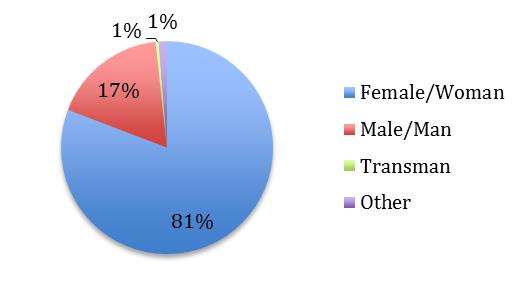
Which gender category do you most identify with?
As might perhaps be expected, the vast majority of respondents self-identified as ‘female/woman’, with 324 answers (81%). However, the survey attracted the interest also of a significant number of male respondents with 70 answers, constituting 17% of responses. Approximately thirteen respondents chose not to answer this question on gender identity, while two respondents were transmen. While the option to self-identify beyond a tick-box approach was valuable, the terms of the question were slightly unclear, or people – as often happens online – were being less than sincere when responding that their gender was ‘heterosexual’ (2), ‘earth gender’ (1), ‘drama’ (1), and ‘theyism’ (1).
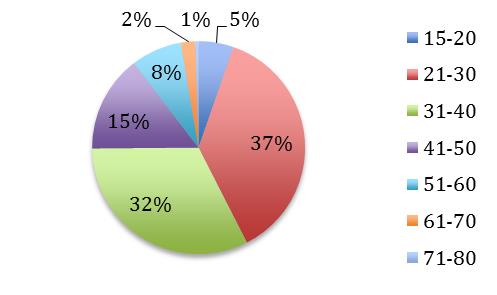
Which age bracket do you belong to?
Respondents were reasonably well-spread across all ages, with the bracket 21-40 the best represented. There were no significant differences between the percentages of male and female respondents falling into each age bracket.
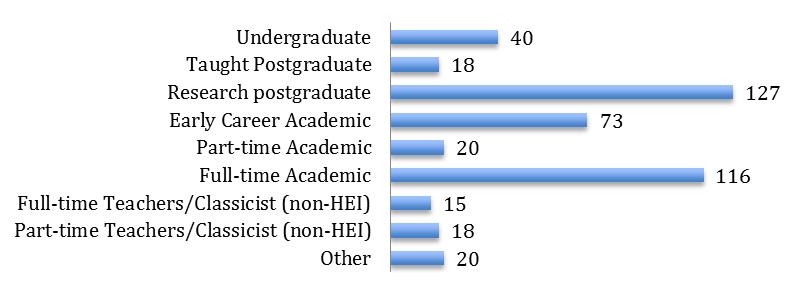
How would you describe your current occupational status?
Substantially more research postgraduates and full-time academics responded than any other group. This might reflect that certain groups are particularly engaged in the issues represented by the WCC, and are therefore more likely to complete the survey. It may also be that the professional demographic of those who completed the survey was determined by the channels through which the survey was advertised, namely the Classicists Liverpool List and social media. There was a reasonable take-up among non-HEI professionals, which itself demonstrates the pertinence of the issues identified in the survey (i.e. access to ancient language teaching, how Classics is taught), and that they begin earlier than Higher Education.
The full-time academic staff category comprised nearly 10% more male than female respondents. However, the spread of female respondents covered a wider range of career categories in general, since there were far more female respondents. Therefore, one should be wary of treating this discrepancy in the full-time academic group as meaningful without a fuller data set.
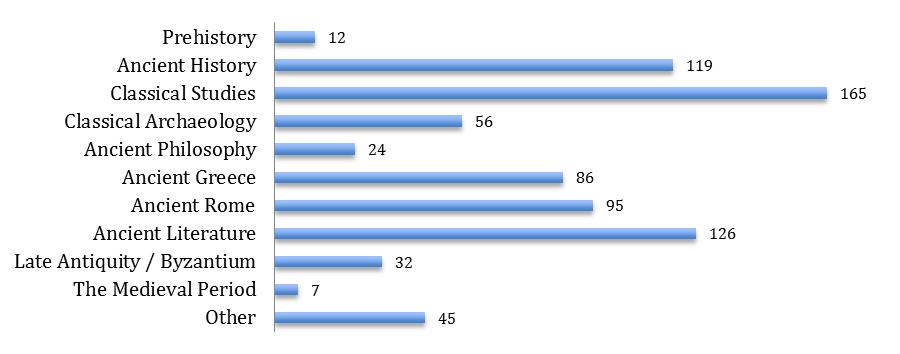
What broadly is your field of study?
Respondents were fairly widely spread across all fields of Classics. Statistically this is hard to quantify as there is likely to be significant overlap between categories, and some may encompass a greater number of subfields than others. There was also a considerable number (45) of ‘Other’ responses, which might include large disciplines such as Epigraphy, Papyrology, and Classical Reception. There were no significant differences between male or female percentages of respondents in particular fields.
3. Gender in professional environments (Amy Russell, with Lisa Eberle on HESA and CUCD data)
The first question in the section asked, ‘How many hours a week on average do you work in your position?’ 16% of respondents were not in employment, while 36% reported that they work fewer than 40 hours per week, and 47% worked more than 40 hours per week. These numbers may be slightly skewed because some respondents chose to give the hours they are contracted to work, while others gave the hours they actually work. The ambiguity only goes to further underline our headline statistic for this section: 52% of respondents reported that they are expected to work more than their contracted hours in order to fulfill the regular duties of their job. 20% did not answer the question about whether they worked more than their contracted hours, but in free-text comments many of those noted that they did not know what their contracted hours were. Several noted that their official job description only covered teaching, but they felt required to contribute extra time to keeping current in their research, either as an implicit requirement of their job or as a necessity for career progression.
3.1 Gender ratio
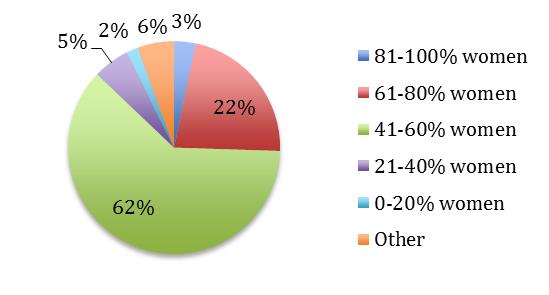
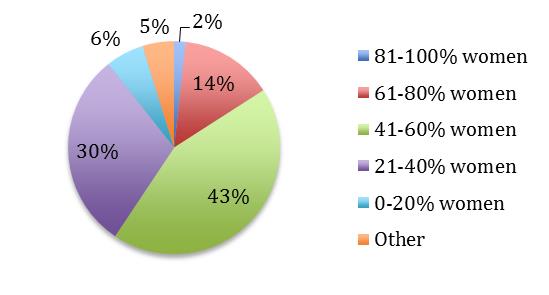
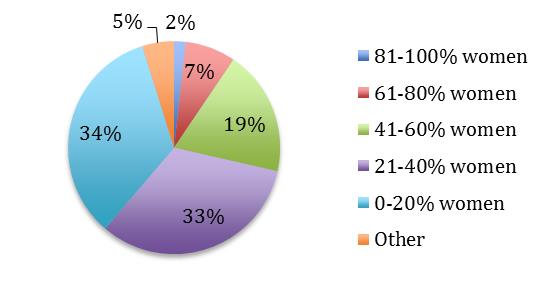
Respondents perceived that the student body is balanced or predominantly female, whilst perceived ratios among staff (and especially senior staff) do not reflect this. Only 19% reported that the balance among senior staff was equal; 66% reported that senior staff were predominantly men, with 34% reporting that as few as one in five senior members of staff were women. At each level of seniority, the perceived representation of women decreases (the infamous ‘leaky pipeline’).
In your professional environment what broadly is the gender ratio between students?
In your professional environment what broadly is the gender ratio between staff?
In your professional environment what broadly is the gender ratio between senior staff?
According to the information provided by the Higher Education Statistics Agency (HESA) for 2014/15, while about the same number of women as men are now being employed in Classics, more women than men work part-time, and more women than men have temporary contracts. Of 105 Classics Professors in the UK, only 25 are women, equivalent to a meager 23.8%. Conversely, in what HESA terms ‘Other contract levels’ women outnumber men by a 3% margin. The impression that emerges from our respondents on career progression and security seems to reflect accurately the situation in the UK. A look at age distribution enables some traction on longer-term developments. In brief, the younger people in the field are, the more likely they are to be female. Classicists under 35 right now are more likely to be female than male (56%). Therefore, if we momentarily disregard the effects of the ‘leaky pipeline’, one could expect that in fifteen years more women will hold Chairs in Classics, Ancient History, and Archaeology.
3.2 Casualization
Casualization is clearly a pressing concern. Half of respondents answered a question directed exclusively at non-permanent employees; 32% of those who answered have less than a year’s employment security. 35% of all respondents cannot support themselves on their income from Classics. This includes 35% of those who identified themselves as Early Career Academics, and 72% of research postgraduates.
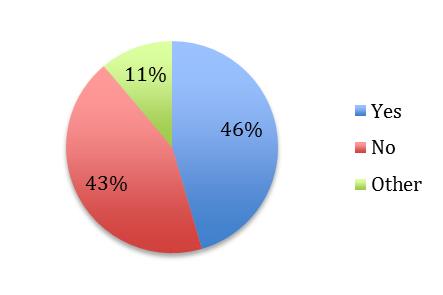
A question asking about the effects of casualization was directed specifically at Early Career Academics and postgraduates. There were 242 responses, of which 46% had experienced the effects of casualization on their employment. A free-text box asked for comments on how they had experienced those effects. The answers provided a depressingly repetitive picture. Respondents were concerned both for their current situation and for their career prospects. Stress and other threats to mental health were the most frequently mentioned issues. Casual employment makes it hard to plan ahead in terms of personal life, finances, including specific issues like being ineligible for a mortgage, and research. Some respondents faced difficulty accessing resources, including libraries and email, either because contracts do not continue over the summer or because frequent moves mean starting afresh every year. Constant moves around the country are draining, and many casual employees end up with very long commutes because they cannot move house for short-term contracts. Pay is low, and casual employees are often not paid for essential parts of their jobs, such as teaching preparation or marking which continues after the end of the official contract. Many are not paid at all for the summer. Multiple respondents noted that their actual hours worked took them below minimum wage. The outlook was pessimistic: several respondents mentioned that they saw jobs which in the past would have been permanent be given to temporary or casual employees.
For Early Career Academics and Postgraduates – have you experienced the effects of casualization in your employment?
It is instructive to compare the experience of our respondents with the data provided by the Council of University Classics Departments (CUCD). From 1986, the CUCD has gathered information on the total number of full-time equivalents (FTEs) in Classics departments all over the UK. From the academic year 2001/02, it began collecting more detailed information, indicating part-time vs. full-time employment and permanent vs. temporary positions (see here the most recent publication). This focus makes the data immediately relevant to the issue of casualization as it pertains to the field of Classics. The CUCD has not yet gathered information about the gender or ethnicities of people working in Classics in British Higher Education Institutions. To widen the scope of this annual data-gathering effort, including gender and ethnicity factors would be a beneficial integration. In this way, the CUCD statistics would help to monitor the gendered and ethnic fabric of Classics departments in the UK.
4. Gender in Professional Interactions (Katherine McDonald)
This section was made up of three questions, with respondents being invited to contribute examples with their answer if they chose. The free-text questions which invited respondents to give examples from their experiences ended up overlapping considerably. Responses included discussions of discrimination and negative attitudes towards women in the workplace, difficulties for women in recruitment and promotion, problems related to parenting in academia, sexual harassment, and bullying.
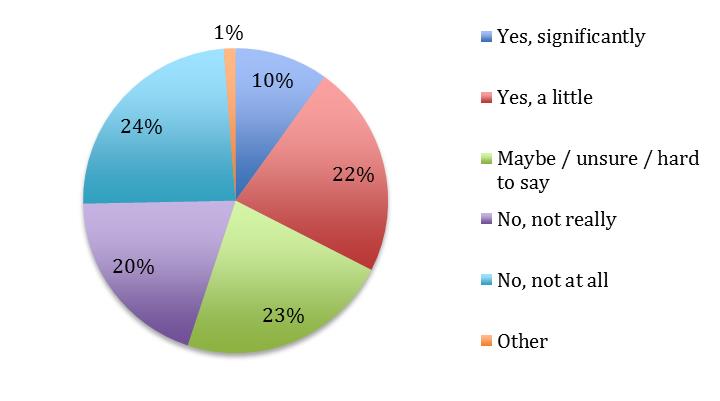
In a professional environment have you experienced discrimination on the basis of your sex, gender, sexual orientation, or issues associated with these?
For this question, 32% of respondents reported that they had experienced discrimination based on their sex, gender or sexual orientation. A further 44% thought that they had not experienced such discrimination, and 24% were not sure or replied ‘Other’.
Of these, over a quarter of respondents (118) added to their reply with a longer answer. Some of the most common complaints included: not being heard or not being taken seriously; being given tasks that were seen as undesirable or offered lower rewards (such as higher teaching loads, higher expectations of administrative and pastoral work, and even making the tea) and being prevented from taking up desirable or highly rewarded tasks; and women’s research not being taken seriously (particularly research connected with gender and feminism). Several respondents reported being warned off feminist research if they wished to remain employable. Being pigeon-holed into certain roles or modes of behaviour was another common theme of the answers, with respondents expressing frustration that they were expected only to do feminist or woman-centred research, that they were expected to be naturally ‘nurturing’ towards students, or that they were expected to act in a particular way in interpersonal interactions in their departments.
Problems with students was another common element in the survey responses, with clear concerns from respondents that students do not take female teachers and lecturers seriously or give them poor evaluations – with the introduction of the Teaching Excellence Framework this problem needs to be addressed. Conversely, several students also mentioned that their teachers and supervisors had had lower expectations of women as learners.
A number of respondents replied in this section that women with children, or women of childbearing age, were at particular risk of these kinds of problems. Several respondents highlighted that gender intersects with age, ethnicity, and sexuality – young women, women of colour, and gay women felt that they had a particularly difficult time being taken seriously.
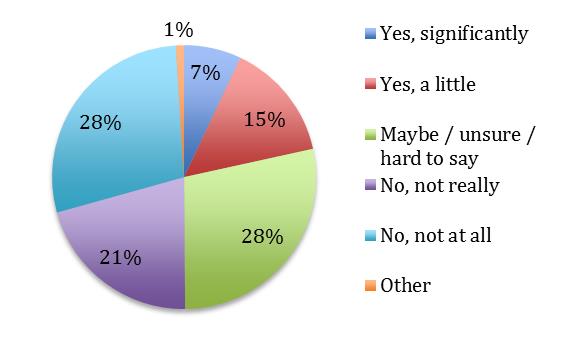
Have issues of gender, sex, or sexual orientation affected your career progression?
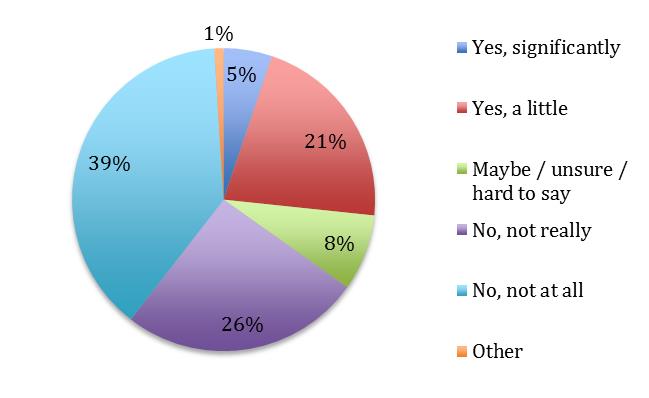
Of 399 responses, 22% felt that their career progression had been significantly or a little bit affected by their gender, sex or sexual orientation. 28% felt that it was hard to say.
In the comments, there was a particular focus on pregnancy, breast-feeding, and parenting as problems in career progression. Respondents felt that returning after a career break or maternity leave was particularly challenging. Many respondents also felt that men were more likely to get recruited to permanent positions and more likely to be promoted or encouraged to apply for promotion, though three respondents felt that recruitment was now favouring women.
Have you experienced unwelcome and/or inappropriate sexual behaviour in a professional environment?
For this question, 25% of respondents said that they had experienced unwelcome or inappropriate sexual behaviour. 39% said they had not experienced any inappropriate sexual behaviour at all, but a number of these respondents nevertheless reported having witnessed this behaviour. A small but significant number of the comments included reports of very serious instances of sexual harassment, assault, intimidation, and bullying.
Many respondents brought up incidents of inappropriate sexual behaviour or comments from their students; other reported being the target of sexual harassment by their teachers, lecturers, or supervisors. In particular, female graduate students identified themselves as targets of sexual harassment and unwanted sexual attention by their supervisors, colleagues and academics in other contexts, particularly at conferences. The repercussions of this dynamic in academia should be taken very seriously.
There were also four suggestions in the comments that things are improving for women in academia in this regard – sexual harassment and bullying are taken more seriously by management and Human Resources, and overt misogyny is not seen as ‘normal’ – but there are nevertheless still serious problems being experienced across the age groups. A number of respondents commented that these problems seem disproportionately to affect groups which are already vulnerable, namely young women, women in minority groups, and women with children.
5. Gendered Work: Parenting and Caring (Victoria Leonard)
In this section the questions were designed to ascertain information about parenting and caring responsibilities not as a distinct personal activity but as an inextricable part of a professional career. The questions fell broadly into two categories, asking respondents about balancing parenting or caring responsibilities and a career, and the facilities provided by places of employment.
Have you found it difficult to resolve conflicts between your personal or family life and career?
The survey asked if respondents had found it difficult to resolve conflicts between personal or family life and their career, and at 63% overwhelmingly the response was yes. The question ‘Has the issue of career progression and the nature of academic life affected your parenting and caring choices?’ produced a more mixed response: 40% of people affirmed that this was the case, but many participants found that the question was irrelevant, not having such responsibilities.
When asked if taking on parental or caring responsibilities had harmed participants financially, 49% of people felt that it had. A majority of 35% of people were unsure when asked if they felt that their employer offered adequate institutional support for those taking on parenting and caring responsibilities. This reflects a lack of knowledge, suggesting that such issues are not prominent in HEIs and expected standards are variable. Over 33% of people felt that institutional support was inadequate.
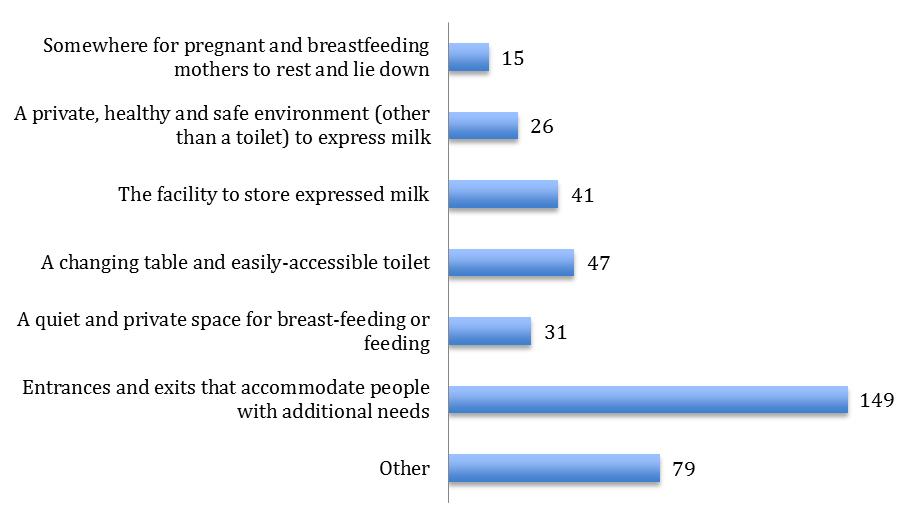
Does your place of employment provide child-friendly facilities?
When asked about child-friendly facilities provided by employers, 62% answered that their place of work had entrances and exits that accommodated people with additional needs. But only 6% of people said that there was somewhere for pregnant and breastfeeding mothers to rest and lie down, despite this being a legal requirement under the 1992 Workplace Regulation.[1] Less than 20% of people said that their place of work had a changing table and easily accessible toilet, a fundamental requirement for young children.
When asked about day-care options, 40% of people were unsure about the day-care options offered by their place of employment. This could suggest that many of the respondents do not have parenting or caring responsibilities, but it nevertheless demonstrates how hidden such issues are despite their fundamental importance for people balancing parenting or caring responsibilities and employment. When asked if their place of employment encourages the presence of children, only 21% could answer affirmatively.
In summary, responses to this section of the survey provide a depressing insight into parenting or caring whilst working. The impact on the careers and finances of people with parenting or caring responsibilities is significant, with inadequate support from employers to counterbalance this. Many of the issues around combining professional employment with the demands of the family are hidden, physically within institutions in the lack of provision, but also in terms of knowledge about what support is available, such as the provision of childcare and the acceptability of children at work.
6. Mental health and disability issues (Emma Bridges)
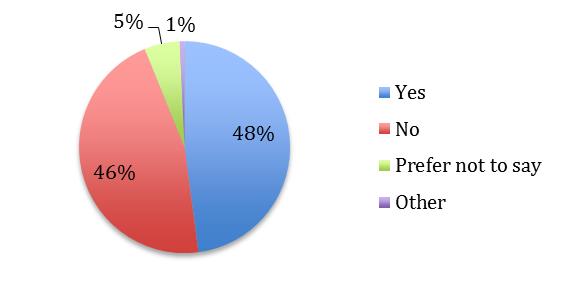
Of 407 respondents, almost half (195) answered ‘yes’ to the question ‘Have you experienced mental health issues?’ Respondents were advised that there need not have been a formal diagnosis to answer ‘yes’.
Have you experienced mental health issues? (There need not be a formal diagnosis to answer ‘yes’)
The free-text comments in this section were revealing: some saw academia as a cause of their problems which included insomnia, depression, mental exhaustion, and anxiety, or as exacerbating pre-existing conditions, with the added stress brought on by, for example, the uncertainty of short-term contracts, performance-related pressures and deadlines, or workplace conflict and bullying. But some reported positive effects, citing the focus their work offers, and the support of colleagues and job satisfaction as being helpful. 32 respondents considered themselves to have additional needs or a disability and, as was the case with those who had been faced with mental health issues, the free-text answers revealed a range of positive and negative experiences relating to support given and discrimination experienced by individuals. Issues here ranged from problems relating to accessibility of facilities/buildings or specialist equipment, lack of training for managers and administrative staff on equality issues, and the failure of other academics to recognise an individual’s needs.
As several respondents pointed out, detaching issues faced by those with mental health problems or disabilities from issues relating to gender in the workplace is complicated, as (perceived or actual) discrimination in these cases might relate to more than one factor; this would therefore require further detailed work to unpick. Nonetheless, what the responses did reveal is that levels of support and understanding vary widely between institutions and departments. Perhaps the key point to note here should be that, at a local level, individuals can make a significant difference: by showing empathy; by challenging entrenched attitudes and behaviours; and by encouraging a culture of openness about mental health and disability issues.
7. State of the field (Irene Salvo)
The objective of the last section of our survey was to gain an overview about the perception of women in Classics, what challenges they face, and how the WCC can contribute to implementing real changes in the current environment.
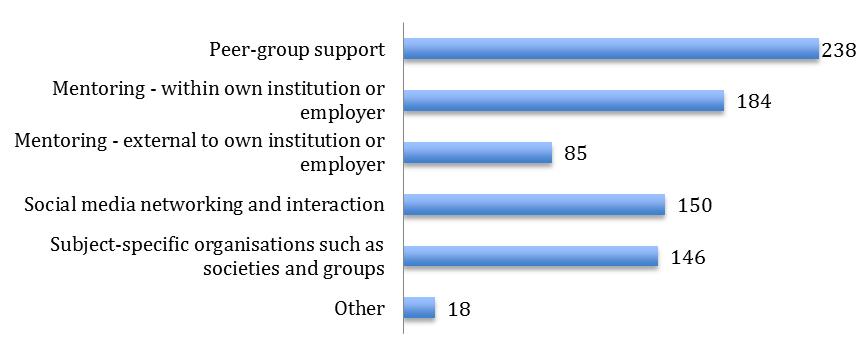
We asked what kind of support is currently available to classicists, and respondents had benefited especially from peer-groups, institutional mentoring programmes, social media interactions, and professional societies.
What kind of support do you currently find beneficial?
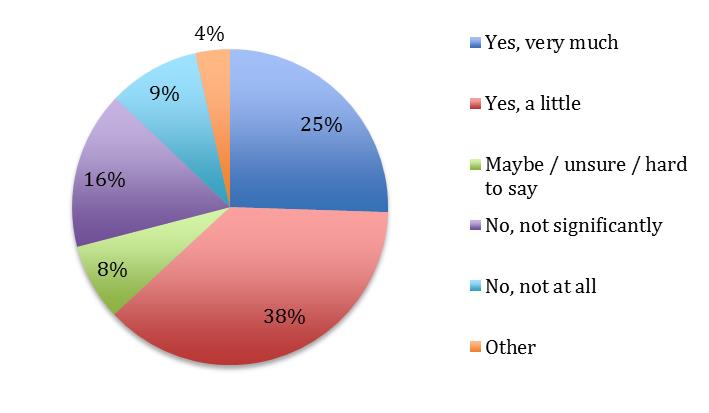
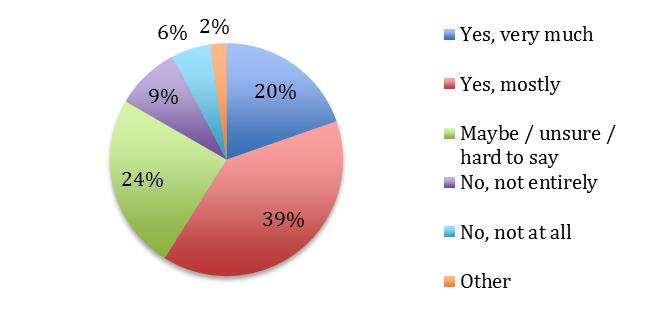
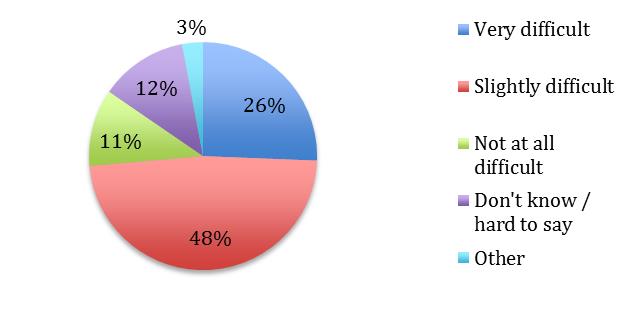
The two following questions focused on the perception of the degree of difficulty of career progression for women. 59% of respondents found career progression to be more difficult than for male colleagues. 74% perceived career progression to be ‘very’ or ‘slightly’ difficult for women.
Do you find the career progression of women to be more difficult than that of men?
How difficult do you perceive career progression to be for women in your field?
This last question allowed respondents to specify in a free-text box what the most difficult challenges were. Problems and issues already mentioned in previous sections recurred here. These included: career progression, promotion, and recognition; the rarity of leadership roles or international key research roles for women, with more pastoral care, teaching, and admin tasks assigned to female colleagues; lack of confidence; not being taken seriously, isolation or even discrimination for women doing gender-related research; scarcity of women in steering committee panels, review boards or interview panels; students’ feedback discriminatory to women; no mentoring programmes for women; expectations of long working hours, with a tangible stigma on those who request a better work-life balance. Parental and maternity issues, childcare, and caring responsibilities formed the other great problematic area, especially because children are still primarily the responsibility of women. Many respondents wrote that they are delaying starting a family, or have decided not to have children in favour of their career. Casualization often exacerbates family related problems, since temporary jobs rarely offer maternity leave or pregnancy allowances. Sexual harassment and everyday sexism was the third greatest area of challenge. Intersectionality with other issues was also prevalent; for example, a young black woman is more likely to face discrimination. Some respondents rightly underlined that in the current job market men and women alike are struggling with an arduous career path because there is a general lack of permanent positions, and gender may not be the main problem. This is true, but it is also undeniable that gender has (at the very least) the potential to hinder, complicate, and delay an already difficult path for female Classicists.
To our final question, ‘what aims or initiatives would you like to see advanced by the WCC in the support of women’, we received a great deal of precious positive suggestions, although some respondents exploited the anonymity of the survey to use this section to vent their spleen against gender-related research, and victimized men complained about the gender-based discrimination they suffer.
The majority of respondents asked for training programmes tailored to women and early career researchers, mentoring from established women in Classics, networking workshops and sandpits, a WCC panel at the Classical Association conference, and a dedicated feminist conference organised by the WCC. Respondents expected action in advocacy and lobbying, such as encouraging conferences to provide childcare facilities; the improvement of REF rules concerning caring and maternity; childcare in Higher Education Institutions; raising awareness of the importance of work-life balance; more transparency on gender and career progression statistics; and greater attention to all-male panels at conferences or committees. Other respondents requested more funding and scholarship opportunities (e.g. for conference travel or publication costs), and events with school teachers and pupils.
There was unequivocally a widespread need for emotional and moral support, for a friendly, open space where one can freely talk, speak out, and be heard. This space could be physical, thanks to meetings organised also outside of London or Oxbridge, or virtual, via social media and blogging. This section of the survey gave voice to a clear call for a greater equality in Classics in general: the image of our field needs to be transformed to be less elitist and more inclusive. Furthermore, gender is not just about women, and not just about white, straight, biologically born women.
CONCLUSIONS
With greater visibility for female academics, more women in permanent jobs, and proper parental leave, the situation facing women in academia has improved in some ways since the 1970s. But especially with pay inequality, the rise of short-term contracts and increasing casualization, the career path for female classicists is strewn with unknown obstacles, and the process of navigation is complex, challenging, and at times insurmountable. Certain barriers to progress are clearly gendered, as demonstrated by the data on sexual harassment. On one level, given that half of employed classicists are female (excepting senior positions), the results of the WCC’s survey are a testament to the resilience and resistance of those women. On the other hand, the survey shows that much still remains to be done, and that there is a plethora of measures the WCC can take to improve the situation.
Early Career Scholars are seeking more guidance and networking possibilities in order to be better prepared for an academic career. Considering the HESA data mentioned above, with a majority of female Classicists under 35, it looks like the voices of an ever-growing number of women entering the field are confronted with an authority and power that is predominantly male, with women often excluded from senior and leadership roles.
Our respondents have reported worrying experiences of student and staff victims of sexual harassment. Furthermore, our survey clearly suggests that childcare facilities are undeveloped, and this lack of support impedes the progress of working parents and the creation of a working environment in which staff can find a good work-life balance. Finally, a changing of individual and institutional attitudes to disability and mental health issues can contribute to a safer and psychologically healthier climate for everyone in academia.
Chimamanda Ngozi Adichie writes: ‘gender as it functions today is a grave injustice. I am angry. We should all be angry. Anger has a long history of bringing about positive change.’[1] Reading the 417 stories shared by our respondents, our reactions were anger, astonishment, frustration, and sadness, as well as hope and inspiration. Very often we found ourselves in those stories. The survey represents, then, a valuable opportunity for the WCC to act directly upon the insights the community of Classicists has offered, and we thank all those who generously gave their time and experiences in support of this endeavour.
[1] Chimamanda Ngozi Adichie, We Should All Be Feminists, London 2014, 21.
We use cookies to ensure that we give you the best experience on our website. If you continue to use this site we will assume that you are happy with it.