
Small grant scheme in action: Ilaria Truzzi
The WCC Small Grant Scheme that I received in March 2026, has allowed me to visit two archaeological museums around the Southern Valencian Community and Region of Murcia- Spain. I was already in Spain for a conference, and with the help of this additional funding I was able to book a car to get to the museums, and to stay an additional night to conduct my research. I visited the Vila Museu collection in La Vila Joyosa (Southern Valencian Community) and the Museo de Coimbra del Barranco Ancho (Jumilla – Murcia).
I was able to analyse a series of gaming items—including knucklebones, dice, glass, ceramic bone and stone counters, and gaming sets from many findspots —residential, funerary, private and public.
The investigation consisted in the graphic documentation of gaming items from local Iberian excavations, which are mostly from funerary contexts, and Roman cities. The research spans diverse centuries, which run from around the 6th century BCE up to the end of the 3rd century BCE.
The variety of the ancient settlements in the area are good examples of multicultural exchange conditions and co-existence of people in the past, since the time span of occupancy covers both the Pre-Roman/Iberian and Roman periods. By analysing the objects, I aim to investigate further and draw new conclusions about multiculturality and social aspects of the people who inhabited this land in the past.
All data – both items and related documentation—are still in the process of being analysed, but this visit has successfully served to implement my research in this geographical area.
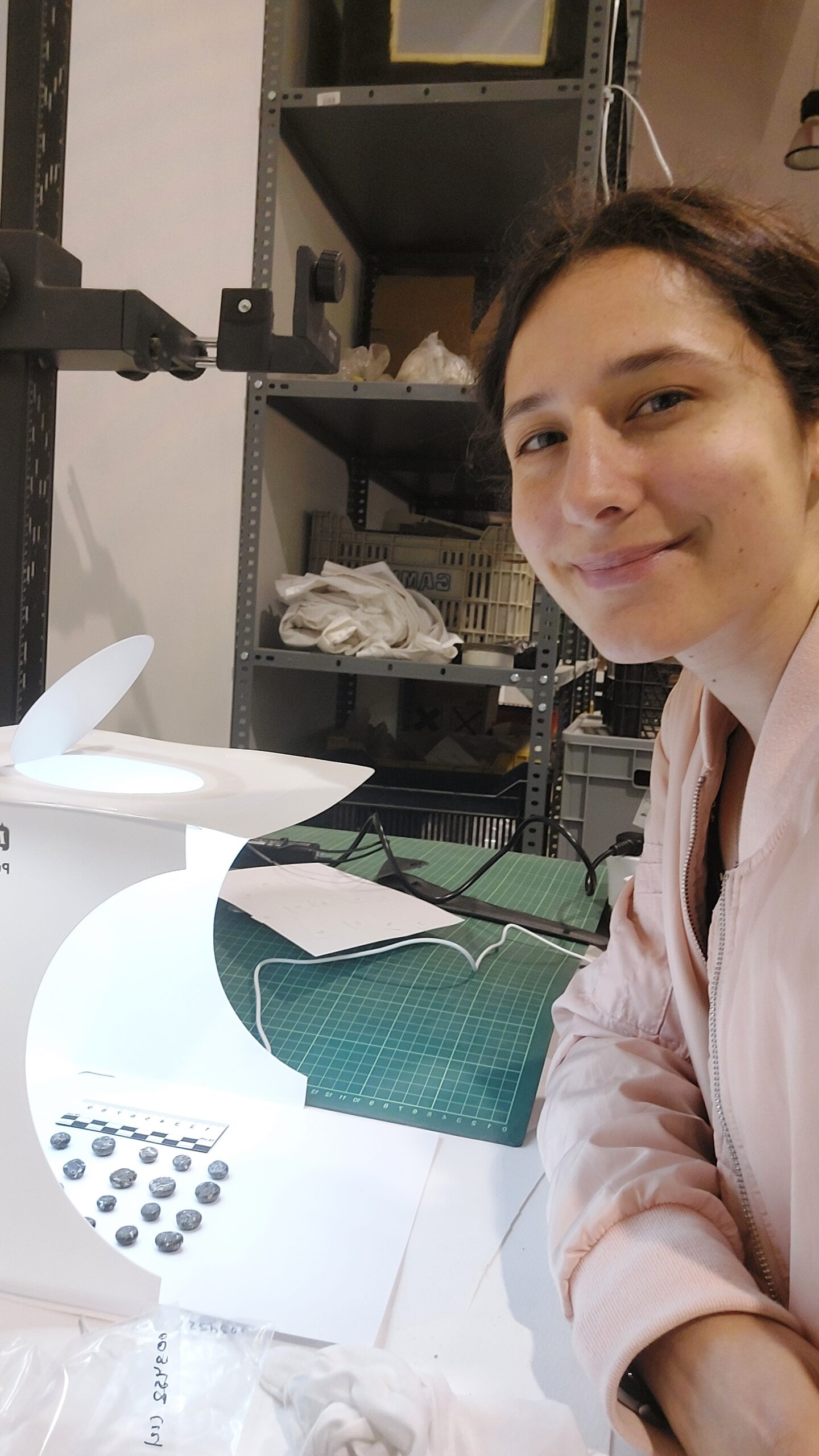
In addition, the collaboration with the museums has served to establish a stronger scientific connection with the museum’s curators. Many of them are not experts on gaming items, and by undertaking discussions and talks, I was able to give them new tools to recognise gaming items and gaming boards within their collections. We also shared papers and books about gaming research in the area, and elsewhere, and we will remain in contact. These museums still receive many new archaeological finds from the systematic excavations or urban excavations around the cities and the district, and the curators will mind contacting me if they find new gaming data.
The analysis that will be drawn from this research will ultimately help preserving the distinctive cultural heritage of games of the Southern Valencian Community and the Region of Murcia and its varied archaeological evidence.
By Ilaria Truzzi, PhD Candidate, University of Reading
Thesis title: Playing in Ancient Iberia. The materiality of games in a multicultural context