
WCC and me – Prof. Amy Russell
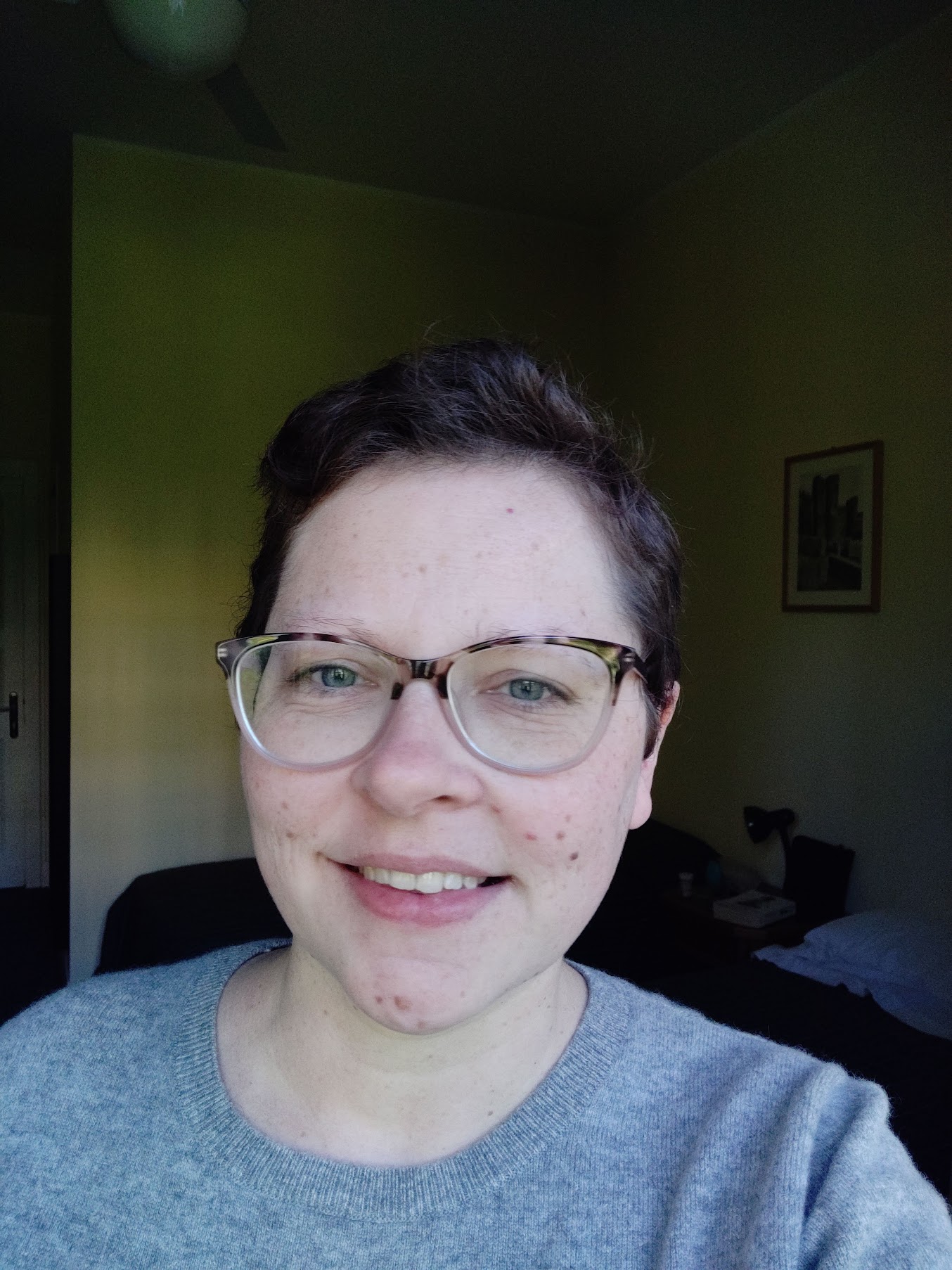
As part of our tenth anniversary celebrations, we are writing a series of blog posts in which members tell us about their experiences with the WCC UK. Our second interviewee is Prof. Amy Russell.
Amy Russell is an Associate Professor of History and Classics at Brown. She is a Roman political and cultural historian, with a particular interest in architecture, urbanism, and space. She is a founding member and former chair of the WCC UK.
She discusses her involvement with the WCC with Katherine McDonald, current co-chair of the WCC.
KM: Tell me a bit more about how you first got involved with the WCC.
AR: You know I can’t remember exactly how I first heard about it. I’d relatively recently come back from America when this all started and I’d been a member of the WCC there. And so when I got an email saying, hey, there’s some people talking about this, I was very excited to join in. And I was one of the first people on the steering committee.
KM: So that was all about ten years ago now. In that last decade, were there any particular WCC events or initiatives that stand out to you and have been important to you?
AR: I think you’ll hear a lot of people talking about community, and I think that’s really true. Going to the in-person events was really important to me, and I’m sure online events important during the pandemic as well. But just the initial buzz around the first few in-person events, and realising, look, this is a community and we do have a real critical mass of people who are interested. And we had people willing to put in time and energy into making it all happen, and having pedagogy events, and they were really exciting people thinking about exciting things.
But I’m also very proud of the work we did behind the scenes. For example, we put in a proposal to be an official nominating body for the REF. I’m sure that there is a very strong case to be made that we should not be cooperating with the REF, but in the end it seemed to me that it’s probably better that we have a voice. So even though at the time we still felt we were very scrappy and new, we put in that application and we were successful, and then when it came time for the nominations I feel like we really did get to have a say. The Steering Committee behind the scenes were reading applications and were able to make a case for people that we thought would be good panellists, and indeed good chairs. And I am pretty proud of what we achieved. And again, with feminist activism, there’s this constant tension between working with the institutions and burning the institutions down, but sometimes working with the institutions can be a powerful tool.
KM: It’s really interesting to talk about the backstage side of it, because people often talk about an ‘old boys network’ as something that women and other marginalised people in Classics are really missing out on, and I think the opportunity to build an alternative version of that is very powerful.
AR: And one that is truly open to everyone. We had always conceptualised ourselves as being open to everyone and having a definition of ‘woman’ that was very inclusive, but also being open to people who don’t identify as women. And that was a big part of our activism from very early on. It was very surprising that there wasn’t some kind of women’s organisation already, but at the same time this was the period when organisations were springing up in different disciplines for trans people as well. Classics didn’t have any of that, at least on an official, institutional footing, and so we immediately were doing some of that work, which I see as all connected. And then, what happened at the San Diego SCS, and we did a lot of coordination of the different Classics organisations in the UK to issue a statement in reaction to that.
And another thing we were doing behind the scenes, and I’m not sure if I would do it the same way now, was contacting people who were putting together ‘manels’ and asking – would you consider making changes to your programme. I don’t know if that was the most efficacious way, but we were thinking it all through. I’ve had a lot of interesting conversations about that, then and since. And I think the guidance that we put out about manels and about hiring plans and things like that, those were good, useful documents. I hope that people have read them.
KM: So, this is all about the wider system, but is there anything you feel the WCC has really added to your life as a woman in Classics?
AR: It definitely comes back to community. These people are still people I feel very close to and work with, and can share frustrations with sometimes. When I was a graduate student, I was still only beginning to realise how bad things were. We talk lot about feminisation of the humanities, but in some places and some universities, Classics still is one of the last to go. I remember when I was doing my Master’s at Oxford, and I decided to sit in on the MSt in women’s studies, and I walked into the lecture room and I realised for the first time in my life I’d been in a room that was majority women at a lecture. Because I’d come up in this system that I’d seen as completely normal, and I’d never connected my own activism outside my work with what was going on in my own field.
K: Final question then: What would you say to anyone who is thinking of joining the WCC for the first time?
A: Well, I’d say, do it. Take advantage of this organisation that allows you to find community with people working at different kinds of institutions, with different kinds of life experiences. For me certainly it’s been incredibly helpful for me to think about, with lots of trial and error, the relationship between my own professional identity and my own activism. Certainly for anyone who is having thoughts about that, this is a great place to go.